

generator
How AI Models Behind Your Video Generator Work
generator shows how AI turns your words into video. This guide explains what transformers do for your script, how language models write captions, what latent representations control, and why GANs make clips look real. You’ll get quick checks to spot AI-made clips, tips to speed exports, how autoregressive generators affect edits, and a short checklist to pick the right plan. We finish with practical rules on copyright, bias, and how to cite the tools you used.
If you want to try it out for yourself and see how the platform works in practice, you can start your first project for free through this special link I used to test it . That’s how I began exploring all its features without any hassle.

Key takeaway
- Focus one clear keyword per page to help ranking (use “generator” where natural).
- Write helpful, answer-driven content.
- Make pages load fast and mobile-friendly.
- Earn links from trusted sites to build authority.
How the AI parts of a video generator work
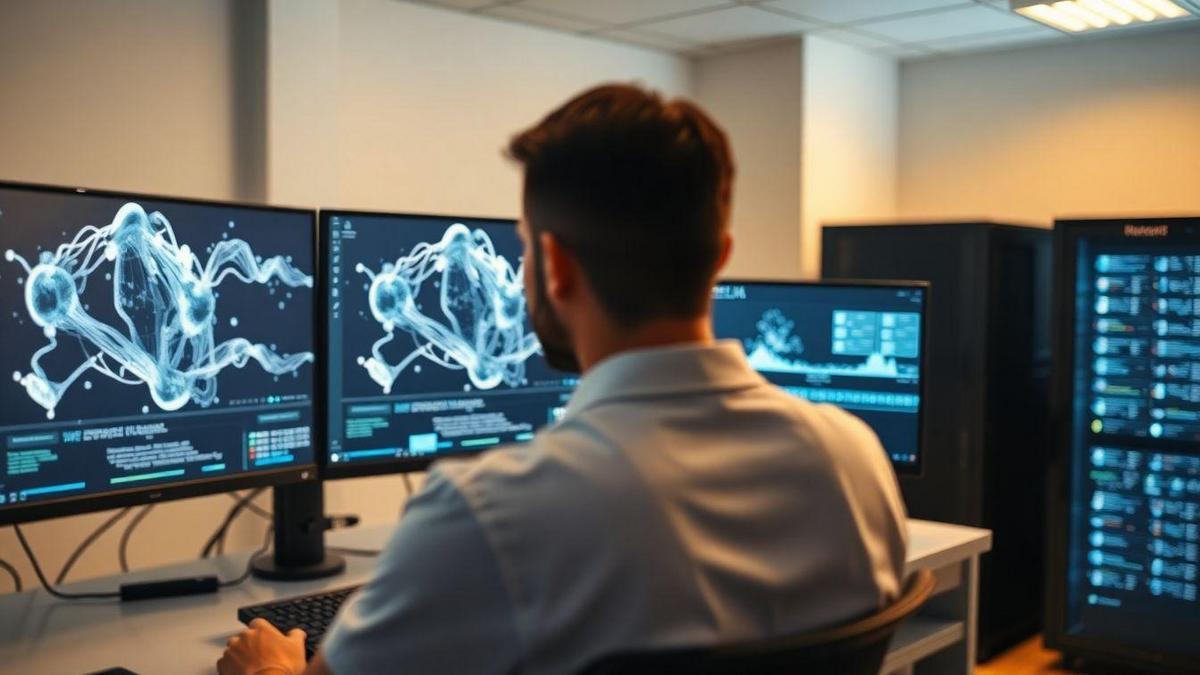
You don’t need to be a coder to understand why a generator feels magical. Several models handle different jobs: one plans visuals, one writes text, and another stores visual ideas as numbers. Together they turn prompts and scripts into moving images and crisp captions.
- Transformer: plans scenes and timing from your script.
- Language model: crafts captions and on-screen text.
- Latent representation: stores the visual essence that controls look and motion.
Tip: short, clear lines let the transformer map scenes faster and give tighter final videos.
What a transformer generator does for your script
The Transformer reads your script like a director scanning a screenplay: it finds what matters, sets pacing, and links lines to visual ideas.
- Breaks text into tokens.
- Uses attention to connect related words (e.g., sunset → warm light, slow motion).
- Creates scene-level instructions (embeddings) that guide image and motion models.
| Input from you | What the Transformer does | Result for your video |
|---|---|---|
| Short script line | Maps key words and context | Scene cue timing |
| Long paragraph | Splits into scenes with priorities | Multiple clips with transitions |
| Style prompt (cinematic) | Applies global emphasis | Cohesive look and pacing |
Heads-up: messy or overly long scripts can misplace focus—keep lines punchy.
How a language model generator writes captions
The language model syncs text to visuals. It shortens lines, matches tone, and formats captions for reading speed.
- Reads scene timing from the transformer.
- Shortens lines to fit screen time.
- Matches tone from your prompt (funny, formal, casual).
- Formats line breaks and punctuation for readability.
Best practice: request 6–10 words per caption for phone viewers to improve comprehension.
Why latent representation matters for video quality
Latents are a sketchbook of visual ideas stored as vectors. They tell the image model about color, texture, motion, and style. Good latents produce smooth, believable frames.
- Compress visual features into vectors.
- Allow interpolation between styles (gentle fades vs. sudden jumps).
- Control detail level—higher dimensions yield sharper images but need more compute.
- Use seeds or reference images to keep consistency.
| Latent setting | Effect on video |
|---|---|
| Low-dimension | Simpler look, faster render |
| High-dimension | Rich detail, slower render |
| Same seed across clips | Consistent characters and style |
| Different seeds | Varied results, more creativity |
Fix tip: if you see jitter or artifacts, keep the seed fixed across frames or reduce interpolation variance.

How your text generator turns words into video scenes
A generator parses your script into scenes and maps each piece to visuals, sound, and pacing so you get a storyboard draft without heavy lifting.
- Parses text into scenes and beats.
- Extracts key nouns, actions, and emotions.
- Matches elements to visuals and audio assets.
- Assigns timing, camera moves, and transitions.
- Renders a draft sequence you can tweak.
Tip: pick a mood and pacing early—the generator will follow it.
How conditional text generation matches your style
Conditional generation lets you steer voice and look. Give rules or examples and the generator applies them across scenes.
- Provide a short style prompt (e.g., friendly and upbeat).
- Add example lines or previous videos.
- Set hard rules (word limits, brand colors, banned words).
- Let the model adapt the style across scenes.
Treat the condition like a recipe: a small change in the prompt alters the whole flavor.
How sequence generation orders your scenes
Sequence generation decides what comes first, next, and last—turning clips into a coherent story.
- Finds the logical thread (problem → action → payoff).
- Builds transitions to keep pacing steady.
- Balances scene length so nothing drags.
- Adds connectors like on-screen text or quick cuts for clarity.
Callout: request short beats for punchy videos or longer scenes for calm demos.
How sampling temperature changes your video tone
Sampling temperature is the creativity knob: low is safe and repeatable, high is inventive but unpredictable.
| Temperature | Tone | When to use |
|---|---|---|
| 0.0–0.3 | Conservative — predictable, factual | Tutorials, legal copy, technical demos |
| 0.4–0.7 | Balanced — natural, friendly | Product overviews, brand stories |
| 0.8–1.0 | Creative — surprising, playful | Ads, sketches, experimental clips |
Start mid-range for most projects; increase for playful twists.
How GANs (and the generator within them) improve realism
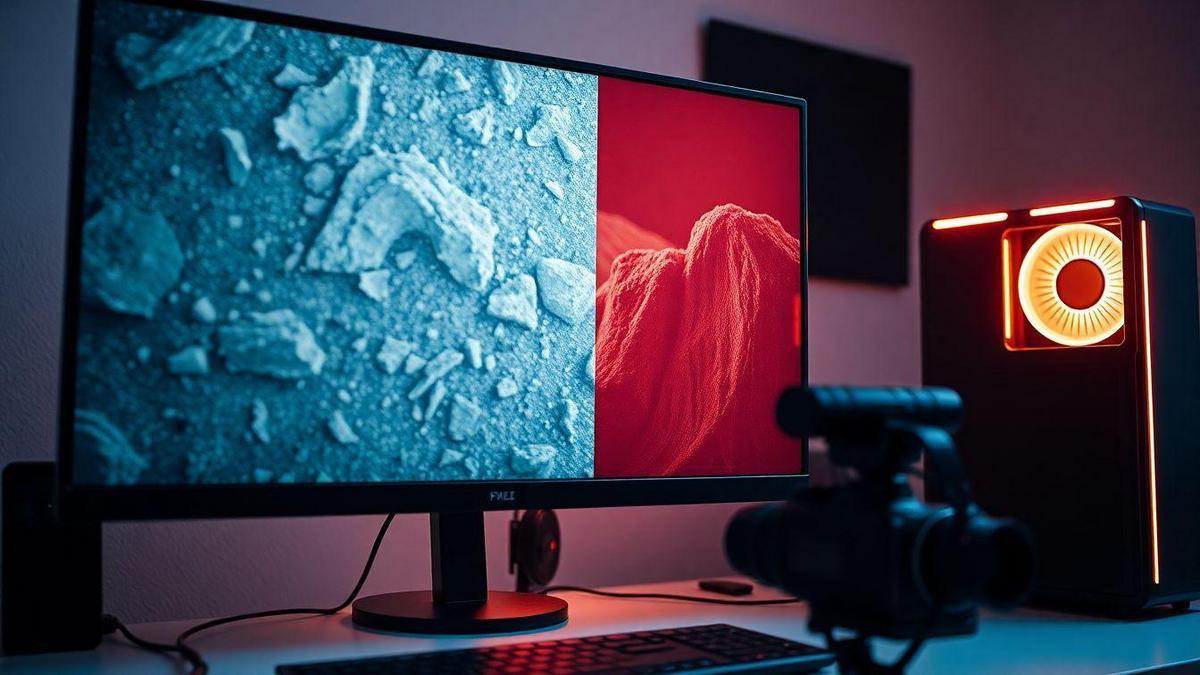
Generative Adversarial Networks are a sparring match inside the pipeline. One model—the generator—creates frames, the discriminator critiques them. That back-and-forth yields sharper textures, more natural motion, and fewer artifacts.
Training is like rehearsal: early takes are rough, but each round teaches the generator better lighting, texture, and motion cues. Over time clips pass for real footage.
What a GAN does for your images
- Synthesizes missing detail so low-res footage looks fuller.
- Smooths transitions for natural motion.
- Fixes inconsistent lighting and color across frames.
- Reduces jitter and frame-to-frame artifacts.
- Imitates texture and fine-grain details your eye expects.
| Role | What it does |
|---|---|
| Generator | Creates new pixels and patterns to mimic real frames |
| Discriminator | Judges realism and forces the generator to improve |
How the generator loss function trains better frames
The loss function is the generator’s coach. Practical setups mix losses so output looks good to math and humans.
- Adversarial loss: rewards fooling the discriminator (sharpness).
- Pixel-wise loss: keeps colors and shapes accurate.
- Perceptual loss: encourages human-relevant features (faces, edges).
- Temporal loss: enforces smooth motion across frames.
Pay attention to multiple losses. Low adversarial loss with high temporal error can make frames sharp but flickery—run quick visual checks during training.
If you want to try it out for yourself and see how the platform works in practice, you can start your first project for free through this special link I used to test it . That’s how I began exploring all its features without any hassle.
Simple checks to tell if a clip was made by AI
Use these like a detective’s magnifying glass; several oddities usually mean heavy AI involvement.
- Subtle flicker between frames (hair, reflections).
- Unnatural eye blinks or missed blinks.
- Repeating textures or warped background objects.
- Poor mouth-lip sync and odd micro-movements.
- Inconsistent shadows or light directions.
- Missing/altered metadata or export artifacts.

Autoregressive generator and edit speed
Autoregressive generators predict the next unit (word or frame) from previous ones—like finishing a sentence. That stepwise approach makes edits interactive but adds prediction work for each tweak.
- Reads recent input and predicts one unit at a time.
- Each prediction feeds the next step.
Tip: short prompts and clear context speed prediction.
How generator latency affects your workflow
Latency is the lag between action and feedback. Lower latency keeps momentum; high latency stalls creativity.
| Latency level | What you feel | Effect on edits |
|---|---|---|
| Low (<200 ms) | Snappy feedback | Experiment freely |
| Medium (200–800 ms) | Slight pause | Complex tweaks slow down |
| High (>800 ms) | Noticeable lag | Avoid small changes; edits become planned |
Aim for low latency to keep creative rhythm.
Quick tips to speed exports
- Render short previews of a segment instead of the full timeline.
- Lower preview quality for drafts.
- Lock or freeze unchanged layers.
- Pre-render heavy effects and reuse them.
- Close unused apps to free CPU/GPU.
Trick: export low-res drafts to validate edits, then do one final high-quality export.

How to pick the right video generator plan
List what you actually need: video count, whether you need an AI text generator, brand removal, and export frequency. That prevents paying for unused features.
Compare features like text generator, templates, and export limits
| Feature | Free | Starter | Pro |
|---|---|---|---|
| Text generator (AI script help) | Basic prompts | Advanced prompts | Long-form rewriting |
| Templates | Limited set | Many themed templates | Full library premium packs |
| Export limits | Low (watermark) | Monthly cap | High or unlimited |
| Resolution | 720p | 1080p | 4K option |
| Branding removal | No | Yes | Yes |
| Commercial license | No | Optional | Included |
| Team seats | 1 | Small team | Multiple seats & roles |
- Text generator: pick stronger AI for long-form or many rewrites.
- Templates: the right library saves hours.
- Export limits: match your monthly output to avoid extra costs.
- Confirm licensing and branding removal for commercial publishing.
Free trials and pricing tiers
Use trials to create a full, real video from start to finish—don’t just click around. Note export limits during the trial and watch billing triggers.
Tip: test a typical project, export at needed quality, and evaluate the text generator and template library.
Short checklist to choose a plan
- Decide monthly video count and max resolution.
- Confirm export cap fits your count.
- Test the text generator in trial.
- Check template variety for your content type.
- Verify license, branding removal, and team seats.
- Compare cost vs. time saved.
Safety, rights, and fair use when you publish generator videos
Using a video or music generator doesn’t remove your responsibility. Read labels, check licenses, and fix problems before upload.
Copyright basics for AI-generated video and music
Copyright covers images, footage, music, voices, and text. AI outputs can still inherit restrictions from training data or licensed samples.
- Read the tool’s license and terms.
- Confirm outputs are cleared for commercial use.
- Prefer public domain or clearly royalty-free assets.
- Buy licenses for stock clips and music when needed.
- Save license receipts, screenshots of terms, prompts, and tool versions.
| Asset type | Risk level | What to do |
|---|---|---|
| Stock video with license | Low | Keep receipt and credit if required |
| AI image based on copyrighted art | Medium | Check tool policy; get permission if needed |
| Generated music with commercial license | Low–Medium | Save license; follow attribution rules |
| Voice clone of a real person | High | Get written consent before use |
Act fast on copyright notices: remove content, respond with proof of license, and fix the source.
Watch for bias in language model outputs
Language tools can produce stereotypes, hallucinations, or inappropriate language. Review and edit generated scripts as you would any guest on live TV.
- Read every generated line aloud.
- Look for stereotypes, slurs, or one-sided claims.
- Fact-check dates, names, stats, and quotes.
- Test prompts with diverse perspectives and compare results.
- Use human reviewers for sensitive topics.
A single line can damage reach—run a quick bias pass before publishing.
Best practices to cite tools and stay within rules
Citing tools protects you and builds trust. Include credits in descriptions and keep records.
- Put tool name and link plus license in the video description (e.g., Created with XYZ generator — commercial license).
- Add short in-video credits when needed (Music: Title — Licensed from ABC).
- Save prompts, receipts, and tool version in a records folder.
- Follow platform disclosure rules for synthetic media and add disclaimers for synthetic voices or likenesses.
| Where to cite | What to include | Example |
|---|---|---|
| Video description | Tool name link license | Created with XYZ generator — commercial license |
| In-video caption | Short credit | Music licensed from ABC |
| Records folder | Prompt receipt version | Prompt.txt, license.pdf, tool_v3.2 |
When in doubt, credit it—transparency costs nothing and can prevent problems.
If you want to try it out for yourself and see how the platform works in practice, you can start your first project for free through this special link I used to test it . That’s how I began exploring all its features without any hassle.
Conclusion
AI stitches your script into moving pictures via Transformers that plan scenes, language models that write captions, and GANs that sharpen realism. Keep prompts clear, manage sampling temperature for tone, and treat latent representation as your visual palette. Aim for low latency to maintain creative flow, use short previews and layer locks to speed exports, and keep seeds consistent for continuity.
You’re the editor and the ethical guard: vet outputs for bias, save licenses and prompts, and cite the generator tools you used. Use the checklist before subscribing to a plan so you don’t pay for unused features. Run the AI-detection checks before publishing.
In short: make clear choices, test in the real world, and protect yourself with records and credits. You’re the director—these generator tools are your instruments. Want more tips and deep dives? Read more at https://blog.marktingdigitalmkt.com.