

generator
generator choices can feel confusing, but you can learn what matters fast. This guide shows when a portable unit is best for short outages or camping and when an inverter gives quieter, cleaner power for sensitive gear. You get simple sizing steps, fuel and run-time tips, easy maintenance checks, installation and cost notes, and clear safety rules to keep your family and equipment safe.
If you want to try it out for yourself and see how the platform works in practice, you can start your first project for free through this special link I used to test it . That’s how I began exploring all its features without any hassle.

Key takeaway
- Get the main idea fast and scan headings for what matters.
- One clear next step: decide what you must power.
- Skip details you don’t need and remember the core point: pick the right generator for your needs.
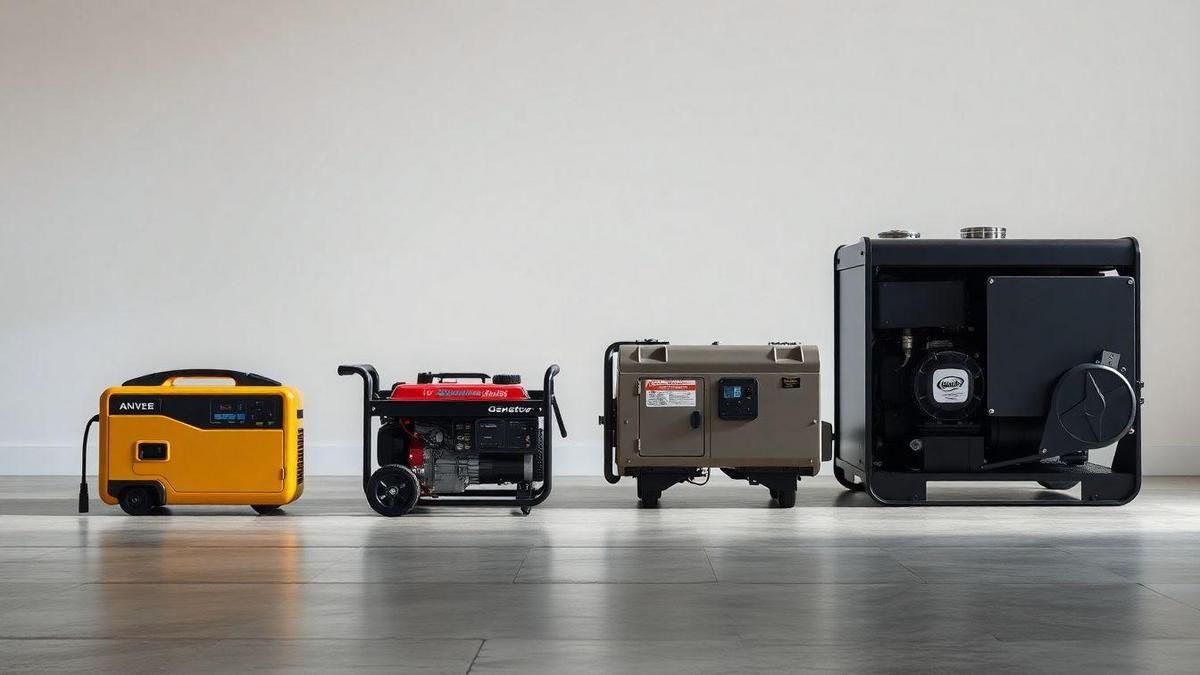
Choose the right generator type for your needs
Pick a generator that matches what you actually need — power for tools, a few appliances, or sensitive electronics. Factor noise, portability, budget, and whether you’ll run laptops or medical gear.
- Portable generator: Best for raw watts on a budget — tailgates, job sites, short home outages. Simple setup and high wattage, but louder and rougher for sensitive electronics.
- Inverter generator: Best for laptops, phones, TVs, and medical devices. Produces clean, stable power with low harmonic distortion, quieter and more fuel-efficient. Often lighter and can be linked in parallel for more power. Cost per watt is higher.
Tip: If you plan to run a laptop, CPAP, or camera gear, choose an inverter — it protects sensitive devices.
Quick comparison
| Feature | Portable Generator | Inverter Generator |
|---|---|---|
| Noise | Louder | Quieter |
| Power quality | Rough but powerful | Clean, stable |
| Price per watt | Lower | Higher |
| Portability | Heavier | Lighter |
| Best use | Job sites, heavy tools | Camping, electronics, RVs |

How to size a generator for your home and devices
You want a generator that handles your needs without wasting money. For each appliance know two numbers: running watts and starting (surge) watts. Motors (fridges, ACs, pumps) draw higher startup power.
How to size:
- List every device you want to run.
- Note running watts and starting watts (if any).
- Add all running watts = total running watts.
- Find the single highest starting watt value.
- Minimum starting capacity = total running watts highest starting surge.
- Add a 20% safety margin.
If you lack exact specs, use typical values and add the 20% margin.
| Appliance | Running watts (typical) | Starting watts (typical) |
|---|---|---|
| Refrigerator | 700 | 2200 |
| Sump pump | 800 | 2500 |
| Window AC (1 ton) | 3500 | 6000 |
| Lights & small electronics | 600 | — |
| Example total running | 5600 | |
| Highest single start (example) | 6000 | |
| Minimum generator size (example) | 5600 running / 11600 starting |
Backup generator vs whole-house standby
- Backup/portable: Good for a few circuits (fridge, lights, furnace fan). Connect via cords or a manual transfer switch.
- Whole-house standby: Permanently installed with an automatic transfer switch, rated in kW. For full-house coverage you may need 10–20 kW or more. Professional sizing and installation required.
Quick rule: Want everything powered? Plan for whole-house standby. Only need essentials? A backup generator will save money.
Easy sizing steps recap:
- List essentials, estimate running and starting watts, add largest start to running total, apply 20% buffer, pick a unit with those ratings. For whole-house, get a professional load calculation.
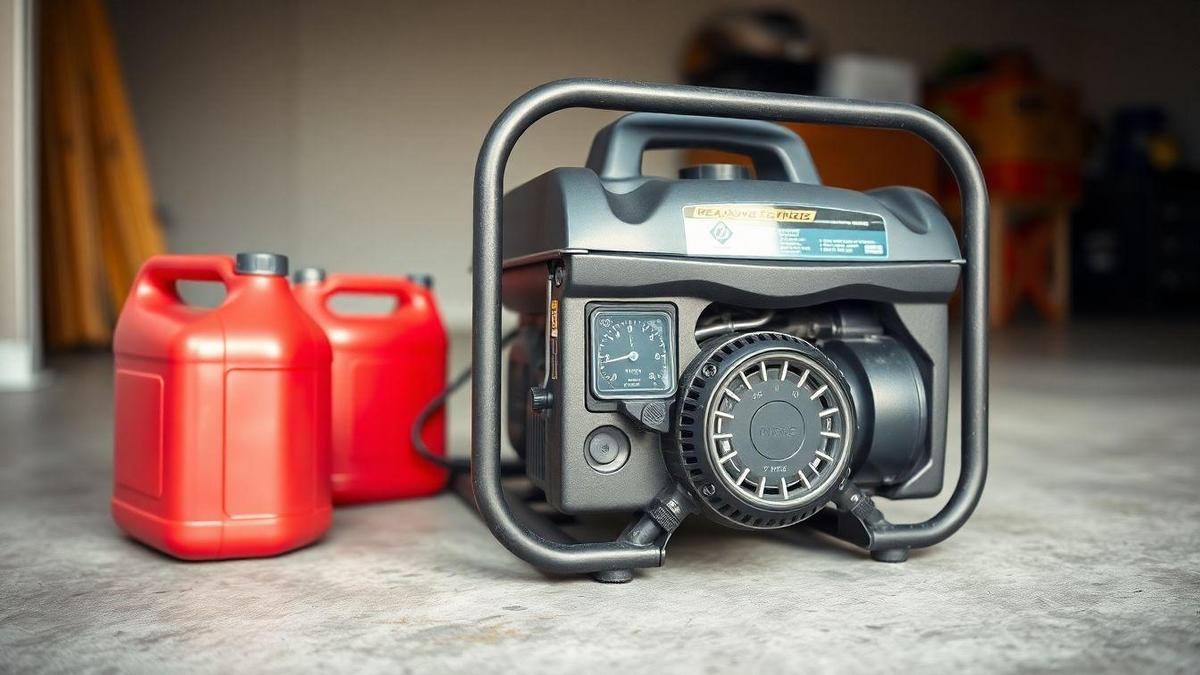
Understand generator fuel consumption and run time
Know how much fuel a generator uses and how long it will run.
Typical fuel burn at ~50% load
| Fuel | Typical burn (gal/hr) | Note |
|---|---|---|
| Gasoline | 0.6–1.5 | Common for portable units; cheaper up front but burns faster |
| Diesel | 0.4–1.2 | More efficient and better for long runs |
| Propane | 1.0–2.0 (propane gallons) | Stores well and clean-burning but uses more volume |
Estimate runtime:
Runtime (hours) = Tank capacity ÷ Burn rate
Examples:
- Small portable (gas): 5 gal tank ÷ 1.0 gal/hr = 5 hours
- Standby diesel: 20 gal ÷ 0.8 gal/hr = 25 hours
Load estimates:
- Low (~25%): ~30–60% of 50% burn rate
- Medium (~50%): use table values
- Full (~100%): ~1.6–2.0× the 50% burn rate
Fuel planning tips:
- Check fuel before an outage; keep a 20–30% buffer.
- Store fuel safely, rotate every few months.
- For propane, plan extra tanks or refill access.
- Prefer diesel or larger tanks for long outages.
- Test-run your generator monthly at realistic loads.
Safety: Store fuel away from living spaces and follow local rules.
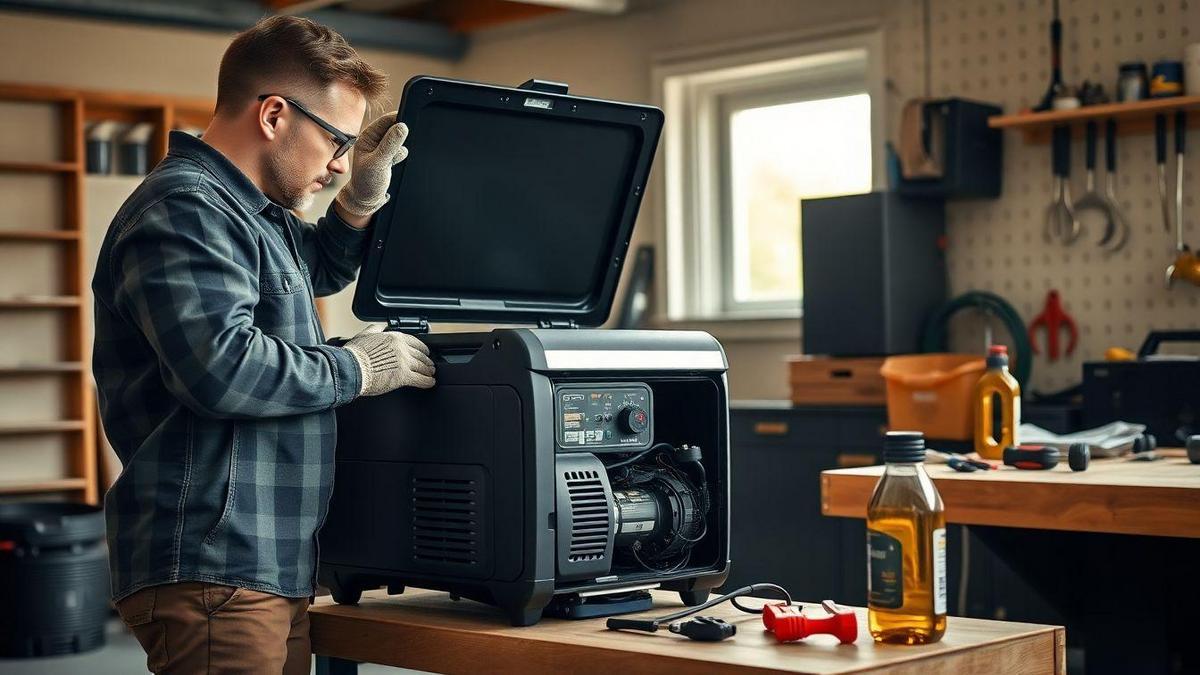
Follow generator maintenance tips to keep your unit ready
Routine checks keep a generator reliable.
Monthly or per-run tasks:
- Oil: Check level every 25 hours of run time or monthly if idle. Change if dirty or low.
- Air filter: Inspect monthly and after dusty use; replace if clogged.
- Spark plug: Check every 100 hours or yearly; replace if burned or fouled.
- Battery: Inspect terminals and charge monthly; clean corrosion and replace every 3–5 years.
Safety: Always switch the unit off, disconnect the spark plug, and let the engine cool before work.
Annual service and load testing:
- Schedule annual service with an authorized technician to change fluids, inspect controls, and replace worn parts.
- Do a load test once a year to simulate real demand and check the automatic transfer switch.
- Check fuel and lines annually; drain old gasoline or use stabilizer.
Simple maintenance schedule:
| Frequency | Task |
|---|---|
| Weekly | Visual check — leaks, loose parts, fuel level |
| Monthly | Check oil, air filter, battery charge |
| Every 6 months | Change oil (per manual), clean battery terminals |
| Annually | Full service load test by a pro |
Keep a log of dates and notes; store basic spares (oil, filter, spark plug, terminal brush).

If you want to try it out for yourself and see how the platform works in practice, you can start your first project for free through this special link I used to test it . That’s how I began exploring all its features without any hassle.
Know generator installation cost and what affects price
Installing a standby generator can range widely. Expect anywhere from a few thousand to tens of thousands depending on unit size, transfer switch, and site work.
| Component | Typical cost (USD) |
|---|---|
| Standby unit (whole-house) | $4,000–$12,000 |
| Transfer switch | $500–$3,000 |
| Site prep (pad, concrete) | $300–$2,000 |
| Fuel hookup (gas/propane) | $200–$2,500 |
| Wiring & breakers | $500–$3,000 |
| Labor / electrician & plumber | $800–$4,000 |
| Permits & inspections | $50–$500 |
Budget tips:
- Get at least three written quotes and compare total installed cost.
- The transfer switch type matters: manual is cheaper; automatic costs more but flips instantly.
- Site prep, long electrical runs, and panel upgrades increase cost.
- Local labor rates and permit requirements vary.
Permits and code:
- Most jurisdictions require building and electrical permits.
- Natural gas or propane hookups usually need permits.
- Installers must follow local electrical codes (NEC widely used in the U.S.).
- Notify utilities if your generator ties into the grid; follow noise and setback rules.
- HOA approvals may be required.
Safety alert: Improper installation risks backfeed and injury to utility workers. Use licensed pros and get inspections.
Installation checklist before you buy:
- Total installed price (unit switch labor permits)
- Transfer switch type and coverage (whole-house vs critical loads)
- Fuel source and hookups
- Site prep needs and timeline
- Panel condition and required upgrades
- Warranty and service plan
- Written contract, permits, references, and licenses
Use generators safely for camping, backup, and home power
Right use keeps everyone safe.
Safe placement and CO rules:
- Always run portable generators outside on level ground and at least 20 feet from doors, windows, and vents.
- Never run a generator in a garage, basement, or enclosed porch.
- Install and test carbon monoxide (CO) alarms inside your home.
- Let the generator cool before refueling and protect it from rain without trapping fumes.
Alternatives: solar generator vs inverter vs gas
| Feature | Solar generator | Inverter generator | Gas generator |
|---|---|---|---|
| Noise | Very low | Low | High |
| Emissions | None | Low | High |
| Best for | Camping, small devices, daytime use | Camping, sensitive electronics | Heavy loads, long runtime |
| Fuel / recharge | Sun / battery | Gas / battery start | Gasoline or diesel |
Choose a solar generator for silence and zero emissions, an inverter for cleaner power and fuel efficiency, or a gas generator for heavy loads and long runtime.
Quick safety checklist:
- Place the generator outside, ≥20 feet from openings.
- Use a proper transfer switch; never backfeed through an outlet.
- Keep a fire extinguisher and fuel in approved containers.
- Use CO detectors in sleeping areas.
- Use outdoor-rated extension cords and let the unit cool before refueling or moving.
- Follow manufacturer maintenance.
Immediate action: If you smell fumes or feel dizzy, get everyone outside and seek help. CO can strike fast.
Generator FAQ
Q: What size generator do I need for my home?
A: List essential devices, total running watts, add the largest starting surge, then add ~20% margin. For whole-house power get a professional load calculation.
Q: How long will my generator run on a tank?
A: Runtime = tank capacity ÷ burn rate. Use the fuel table above for rough burn rates (gasoline, diesel, propane).
Q: Can I run sensitive electronics on any generator?
A: Use an inverter generator or add a UPS for sensitive gear. Portable gas generators may have rougher output and risk damage.
If you want to try it out for yourself and see how the platform works in practice, you can start your first project for free through this special link I used to test it . That’s how I began exploring all its features without any hassle.
Conclusion
Pick a portable generator for raw, cost-effective watts for tools and heavy loads. Choose an inverter generator when you need quiet, clean power for laptops, medical gear, and cameras. Size your unit by totaling running watts, adding the largest starting surge, and adding a 20% safety margin. Know your fuel type, tank size, and burn rate so runtime isn’t a surprise. Maintain the unit — oil, air filter, spark plug, battery — and schedule an annual load test. Follow safety basics (20 feet from openings, CO detectors, no backfeed) and use a licensed pro for installation and permits. Treat your generator like a lifeboat: maintain it, test it, and it will save your day.
Read more at: https://blog.marktingdigitalmkt.com.